


Overview
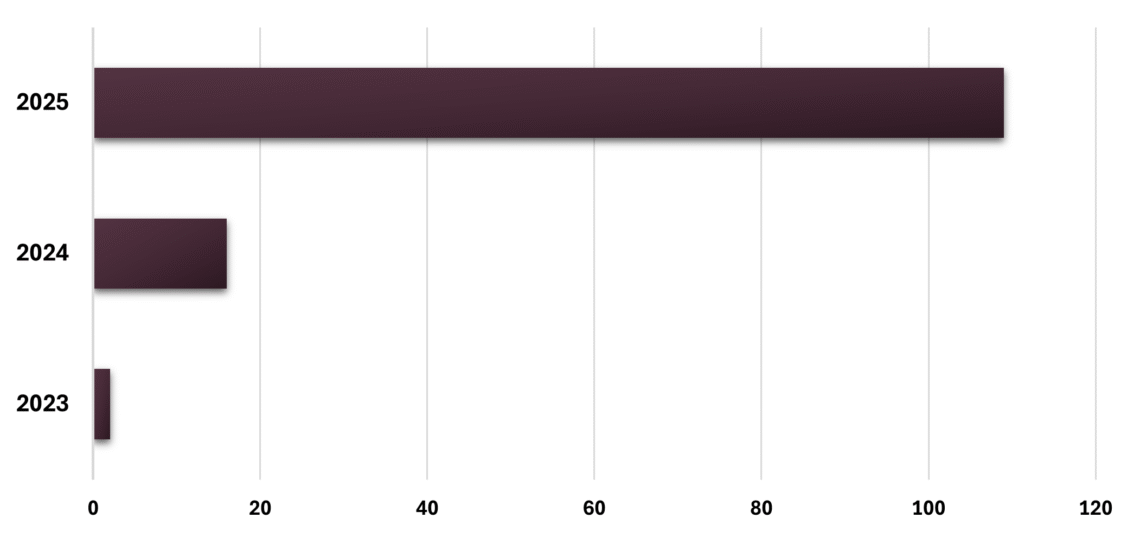
- Drone attacks have increased substantially in the Sahel and West Africa with incidents reported in Mali, Burkina Faso, Cameroon, Nigeria and Togo.
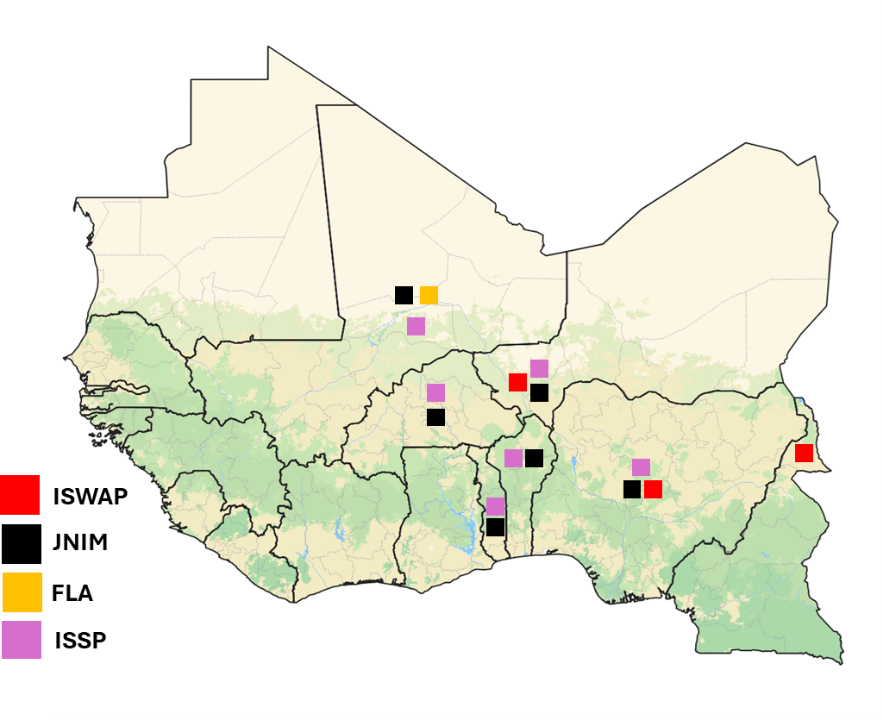
- JNIM, ISWAP and the FLA have been at the forefront of such incidents, with JNIM remaining the dominant user.
- ISSP’s 29 January 2026 Niamey International Airport attack reportedly involved approximately 10 kamikaze drones. It is likely the highest number ever used by a Sahelian-based militant group in a single attack.
- The incidence of drone attacks in 2026 will likely exceed those recorded in 2025.
- The challenge of deploying effective counterdrone measures contributes to the elevated risk of attacks at airports.
Recent Key Developments
Use of first-person view (FPV) unmanned aerial vehicles (UAVs) in warfare has received considerable attention in recent years owing to their transformative effect on the battlefield, particularly along the frontlines, relative to their cost. Their use has altered battlefield tactics, the composition and movement of infantry units, exposed the vulnerabilities of heavy weapons and tanks, and affected resupply modes through their reconnaissance, surveillance and strike capabilities. While their use has been one of the defining features of the Russia-Ukraine war since 2022, their expanding use in the Sahel region and West Africa by non-state armed groups (NSAGs) emerged as a notable trend in 2025.
The Turning Point
Islamist militant groups, Jama’a Nusrat ul-Islam wa al-Muslimin (JNIM), Islamic State West Africa Province (ISWAP) and Tuareg rebel groups – the now-dissolved Strategic Framework for the Defence of the People of Azawad (CSP-DPA) and Azawad Liberation Front (FLA) – have been at the forefront of deploying drones for kinetic purposes. In September 2023, JNIM launched its first documented, albeit unsuccessful, aerial assault in Mali’s Mopti region. In 2024, Tuareg rebels in Mali and ISWAP in Nigeria launched their first drone attacks.
These groups have demonstrated varying levels of proficiency in their use of weaponised drones, reflecting their organisational capabilities and battlefield priorities. Images and videos of attacks and drones used suggest they almost exclusively use first-person view (FPV) consumer drones and commercial drones to drop explosives or as suicide drones.
Data: ACLED
JNIM
Between 01 January 2023 and 31 December 2025, the group deployed drones on at least 85 occasions across Mali, Burkina Faso and Togo. Of 70 incidents, during which drones were assessed to have been the primary weapon system deployed, 30 fatalities were registered and minimal damage was reported. This suggests the group has not yet achieved a high success rate when using drones. This is especially likely for improvised mortars dropped by drones.
Off-the-shelf FPV drones used by groups like JNIM typically carry 1 kg (this includes the battery, drone and weight of the explosive) and commercial drones about 4 kg. Additional weight affects manoeuvrability, flight time (max flight time is 40 minutes from take-off to landing) and, therefore, range (flight range is typically 15-28 km). Therefore, militants using this type of drone are forced to use smaller, less lethal explosives. FPV drones are likely used to drop improvised mortar shells (smaller than 40mm conventional mortar shells) which likely do not stabilise well when dropped onto targets. This explains the limited damage they cause. Larger, commercial drones are more likely to carry conventional mortar shells with larger lethality radiuses (depending on the type of surface).
Tuareg rebels
Tuareg rebels active in Mali appear to possess a higher level of skill in commandeering drones, and possess access to more sophisticated drone technology. Throughout 2025, the FLA conducted at least 25 attacks in Mali – a six-fold increase from 2024, when the Strategic Framework for the Defence of the People of Azawad (CSP-DPA) carried out its first drone attacks. The group has registered a similar fatality rate as JNIM; however, this is highly likely because the group has targeted actors (FAMa and Russian mercenaries) capable of deploying countermeasures, particularly Africa Corp mercenaries. The group has also used advanced drones, such as the VTOL FDG 410 in February 2025, and optical fiber drones. FLA attacks have involved the dropping of mortars or improvised explosive devices (IEDs) as well as kamikaze drones, drones modified to carry IEDs.

ISWAP and ISSP
Since launching its first known drone attack in December 2024, ISWAP conducted at least 11 drone attacks (two in Cameroon and nine in Nigeria) throughout 2025, as part of its tactical evolution. Circumstantial evidence suggests the group has effectively deployed kamikaze drones and drones that drop explosives. The group has recorded a higher fatality rate in attacks involving drones than the FLA and JNIM. However, this is likely because the group has mainly deployed drones during complex attacks on military bases, which often involve indirect fire and a ground assault. The group has also deployed them against moving targets during ambush operations.
Unlike ISWAP, ISSP has been slower to adopt drones for kinetic purposes. However, its 29 January 2026 large-scale assault on Niamey International Airport reportedly involved approximately 10 kamikaze drones. This likely represents the highest number ever used by a Sahelian-based militant group in a single attack. The attack was also the first time the group deployed drones for kinetic purposes.

Assessment
Given the increasing accessibility of civilian and commercial drone technology and the expanding presence of Islamist militant groups, drone deployment for kinetic purposes will likely continue to spread across the Sahel and West Africa through 2026. As a result, the incidence of drone attacks by Islamist militants in 2026 will likely exceed those recorded in 2025.
- Drone attack trends during 2025 suggest that Mali and Burkina Faso will remain the epicentre of armed drone usage in 2026. This is linked to JNIM’s extensive presence in both countries and the group being the dominant user of armed drones in the region. A comparison of drone attacks during H1 and H2 2025 shows how JNIM expanded its use of drones into western and southern Burkina Faso and Mali. This is an indicator of the group’s intent to further scale up drone attacks. Together with the group’s presence along the borders of littoral countries, particularly Ivory Coast, Ghana, Benin and Togo, this means that the armed drone threat could increase in these countries, primarily in border areas.
- In Niger, given ISSP’s expanded activity in the country, particularly the Tahoua and Dosso regions, the group may deploy drones in these two regions. Although trends throughout 2025 do not indicate that the group deploys drones for kinetic purposes, their January 2026 attack in Niamey shows it possesses such technology and has the capability to use it. Given the group’s presence in north-western Nigeria, the threat also extends to regions including Sokoto State in particular.
- Meanwhile, in north-eastern Nigeria, ISWAP will likely continue to deploy drones during attacks against the military. The group has increased armed drone usage since October 2025.
- Isolated security positions in all the above-mentioned countries, such as customs posts and forward operating bases, will likely face the highest threat as such positions are unlikely to utilise drone countermeasures.
The FLA’s drone usage will likely remain limited to the Kidal and Toumbouctou regions of Mali. However, drones enable the FLA to conduct deep strikes against the Malian government and Russian mercenaries. Throughout 2025, the FLA’s use of armed drones, and other armed activity, was almost exclusively limited to the Kidal and Tombouctou regions. This is likely due to these areas forming key parts of the secessionist region of Azawad and the concentration of FLA resources in these regions. Though the FLA has not carried out attacks deep inside territory controlled by the Malian government, drones offer them the capability to conduct precision attacks away from the frontlines – they are light, and don’t require multiple people to transport and operate them.
The use of armed drones by other armed groups in the region remains unlikely. Other prominent armed groups in the region include bandit groups in Nigeria and the Indigenous People of Biafra (IPOB). Like Islamist militant groups, bandit groups in Nigeria have the capability to conduct violent attacks at a similar scale. However, most bandit group attacks, including kidnappings, targeted civilians in 2025. While such groups have occasionally targeted security forces, a meaningful ideological shift driving more frequent attacks would be needed before armed drone adoption becomes likely in the near term. That said, one bandit group using drones, whether armed or not, to gain an advantage against other bandit groups could prompt other bandit groups to do the same. IPOB, which has an operational presence in the South East Region of Nigeria and intermittently targets security forces, particularly checkpoints and police stations, is more likely to adopt the use of drones. Though there has been at least one instance over the past 24 months of the group possessing drones, the group likely lacks the knowledge or resources to weaponise off-the-shelf drones. Many of the group’s weapons are rudimentary and their IEDs possess less destructive capacity than those used by Islamist militant groups. As with bandit groups, the group will more likely use drones for non-kinetic purposes, such as reconnaissance.
The challenge of deploying effective counterdrone measures at airports, especially those that also function as, or are located near, airbases, contributes to the elevated risk of attacks at these sites. Airbases are likely to be high-value targets, particularly in light of the growing use of medium-altitude long-endurance (MALE) drones by the militaries of Mali, Burkina Faso and Niger. Coupled with the challenge of implementing effective counterdrone measures, particularly within urban areas or airports, this contributes to the heightened threat they face. Implementing effective jamming can impact commercial airline operations and nearby businesses, while more viable measures such as using directed jammers require the operator to maintain a visual line of sight with the drone. Despite the type of drone countermeasure put in place, the threat is likely to remain highest during the night-time owing to reduced visibility. Therefore, a modest increase, as drone attacks are not a regular occurrence, in flight disruption is likely at the Modibo Keita International Airport in Bamako, Thomas Sankara International Airport in Ouagadougou and the Diori Hamani International Airport in Niamey.
About Castor Vali Security Information Services
This deep dive forms part of Castor Vali’s wider Africa intelligence and risk monitoring capability. While this report provides detailed analysis of the evolving drone threat across the Sahel and West Africa, our ongoing monitoring ensures that clients receive timely, operationally relevant updates as security dynamics continue to develop.
Our Africa risk monitoring service is designed to help organisations operating across the continent remain informed of emerging threats, including terrorism, political instability, civil unrest, organised crime, and wider geopolitical developments that may affect personnel, infrastructure and commercial operations. Through continuous analysis of local reporting, incident data and regional dynamics, we provide strategic insight that supports informed decision-making and effective risk mitigation.
Africa intelligence subscriptions provide access to:
- Daily Briefs – weekday summaries of key political, security and socio-economic developments across African markets.
- Real-Time Alerts – notifications of major incidents delivered via email and mobile, including analysis, advice and mapping where relevant.
- Weekly Reports – structured reviews of significant events supported by visual data, graphics and incident mapping.
- Monthly Reports – high-level country assessments with short to medium-term risk ratings and forward-looking analysis.
- Deep Dives – detailed examinations of emerging trends, security threats and political developments affecting specific regions or sectors.
We welcome enquiries from organisations seeking to strengthen their situational awareness across Africa. Complimentary trials are available for companies wishing to evaluate the service.
To explore our Africa intelligence reporting or request trial access, please complete the sign-up form below.
Security Information Service Trial
Clients interested in trailing our subscription packages should complete this form:

