


On 07 April 2026, the US and Iran agreed to a two-week ceasefire, with Tehran confirming safe passage through the Strait of Hormuz in exchange for a halt to strikes on Iranian territory. The agreement marked the first significant diplomatic development since Operation Epic Fury commenced on 28 February 2026, when the US and Israel launched strikes against Iran, which were followed by retaliatory action from Iran and its proxies against Israel, Gulf Cooperation Council (GCC) regional neighbours, and maritime targets, among others. Israel has not agreed to halt operations in Lebanon; the Israel–Hezbollah theatre remains active and is explicitly excluded from the current ceasefire framework.
As of 13 April, the US-Iran ceasefire remains in place but is increasingly fragile. High-level negotiations in Islamabad on 11–12 April failed to produce a finalised agreement, reflecting persistent disagreements over Iran’s nuclear programme, proxy activity, and maritime access. The US has since announced plans to implement a naval blockade on Iranian ports from 13 April, targeting vessels entering or exiting Iran while allowing limited transit through the Strait for non-Iran-bound shipping.
Should broader hostilities resume, the security consequences for Africa outlined below would reassert rapidly, a scenario that the ceasefire’s fragility and the absence of a final agreement make credible. For Africa, the conflict’s security consequences operate through four distinct pathways: the disruption of Red Sea maritime corridors; the direct targeting risk to foreign military bases and entities on African soil; the activation of pro-Iran networks that have historically operated across the continent; and Iranian/Houthi support for other militant groups in Africa.
Maritime Disruption and the Red Sea
While the maritime conflict threat has remained confined to the Persian Gulf, Strait of Hormuz, and Gulf of Oman to date, the Red Sea, Bab el-Mandeb Strait, and Gulf of Aden face an elevated disruption risk following the Houthis’ formal entry into the conflict.
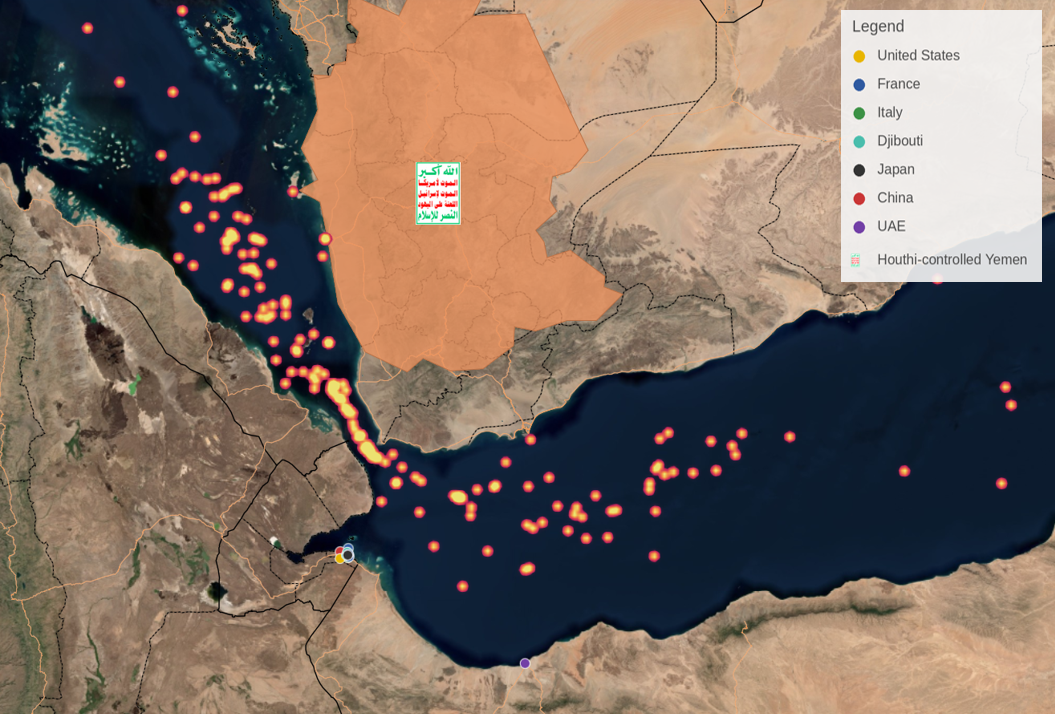
On 28 March, the Yemen-based Houthis entered the current conflict in support of Iran, although the group’s operations over the last two weeks have been focused on land-based strikes against Israel. The group claimed responsibility for at least five strikes on Israel between 28 March and 06 April, for example, targeting sites including Beersheba, Ben Gurion Airport, and Eilat. However, as part of its entry into the conflict, the Houthis have indicated that closing the Bab el-Mandeb is among their options.
The Houthi militia has previously demonstrated both the intent and capability to disrupt maritime traffic through the Bab el-Mandeb Strait, a passage 30 – 32km wide between Yemen and Djibouti carrying approximately 10 to 12 percent of global seaborne trade. Between November 2023 and the Gaza Peace Plan on 10 October 2025, the Houthis struck approximately 178 vessels in the Red Sea and surrounding waters, confirming sustained capability and willingness to impose prolonged maritime disruption (see Maritime Deep Dive: Houthi Strikes Reignite Threat in the Red Sea for background).
The Houthis’ entry into the current conflict forms part of a broader strategic picture in which Iran may seek to hold two chokepoints as instruments of economic leverage. The Strait of Hormuz, which Iran controls directly, has already demonstrated its value as a coercive tool in the current conflict (see Maritime Deep Dive: Iran Crisis Threatens Commercial Shipping), prompting the ceasefire agreement now in place. The Bab el-Mandeb represents a second lever — one Iran can activate through its Houthi proxies without direct involvement. A Houthi maritime campaign would not be an automatic consequence of renewed hostilities but a deliberate strategic choice, most likely deployed if Iran concludes that renewed Hormuz disruption alone is insufficient pressure.
Indeed, no formal Houthi commitment to stand down as part of the ceasefire has been issued, and Israel’s continued bombardment of Lebanon and Hezbollah targets may prompt the group to re-enter the conflict at short notice. Moreover, the likelihood of further Houthi involvement has increased in light of the recent US decision to implement its own blockade of the Strait of Hormuz over the past weekend, which may prompt Iran to apply maritime pressure elsewhere.
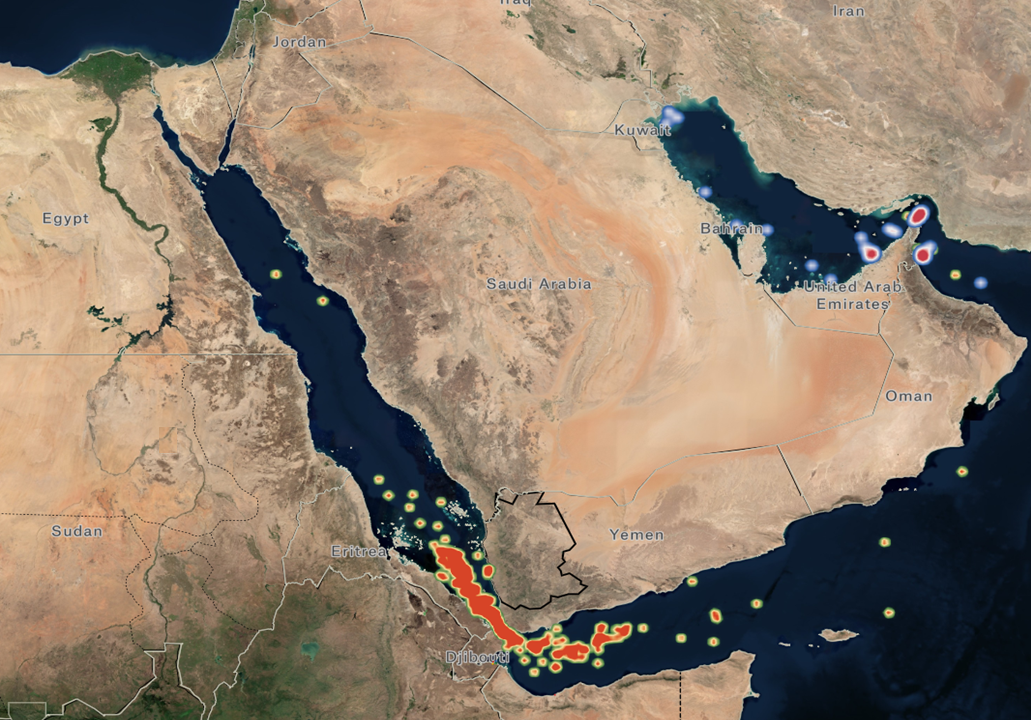
Data: Maritrace, Castor Vali, UKMTO.
Direct Military Targeting of Foreign Bases and Infrastructure
Camp Lemonnier (Djibouti) and Berbera (Somaliland) face the most likely targeting risk, driven primarily by the Houthi movement acting as an Iranian proxy and, secondly, by Iran’s own demonstrated long-range strike capability.
Although Africa has largely remained peripheral to the main theatre of conflict, the threat environment sharpened on 26 March, when the Iranian military reportedly issued explicit warnings that US military personnel, bases, airports, and hotels in countries including Bahrain, Lebanon, Syria, the United Arab Emirates, and Djibouti could be targeted. Within the African theatre, this is most significant for Djibouti, which hosts both Camp Lemonnier and Chabelley Airfield, making it the clearest potential locus for direct conflict spillover. Reflecting this elevated risk, the US Embassy in Djibouti has reportedly tightened its security posture around both the embassy compound and Camp Lemonnier; however, it is worth noting that it has not called for the departure of any staff from the country.
Camp Lemonnier, the US’s only permanent military base on the African continent, hosts over 4,000 personnel and functions as the primary hub for US counterterrorism operations across the Horn of Africa and Arabian Peninsula, located approximately 150km from the Yemeni coast. The co-location of multiple foreign military installations in the immediate area, including French, Japanese, and Italian facilities clustered near the US base, as well as a Chinese base within 10km, reduces the likelihood of a strike on Lemonnier itself, with the more geographically isolated Chabelley Airfield presenting a more probable target. The primarily US-operated airfield, situated approximately 10 kilometres south-west of Camp Lemonnier, serves as the hub for US Africa Command’s drone operations. Open-source reporting from 2025 indicates that Patriot air defence missile systems have been approved to protect US assets in Djibouti, though their operational status has not been officially confirmed, leaving the extent of active air defence coverage over both sites uncertain.
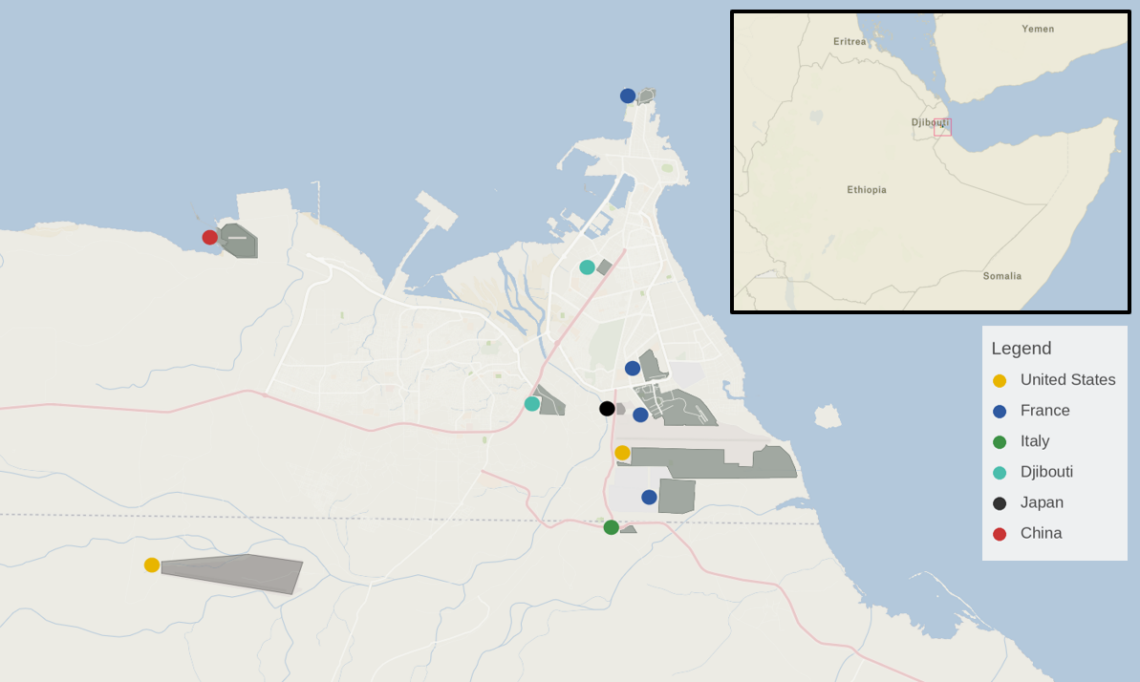
Berbera carries a distinct risk profile. The site is a port city on Somaliland’s northern coast hosting UAE-linked military infrastructure, including a naval facility and airstrip, that supports Emirati Red Sea and Yemen-facing operations.
Unlike Camp Lemonnier, Berbera is more geographically isolated, reducing collateral damage considerations and making rocket or missile attack viable alongside drone strikes. Recent reporting has increased scrutiny of a possible Israeli strategic or security interest in Somaliland, though confirmation remains limited. The site’s perceived alignment with anti-Iranian regional actors is nevertheless sufficient to elevate its exposure even in the absence of confirmed Israeli military use; that risk would increase materially upon confirmation of an Israeli military or intelligence presence.
The Houthis represent the more probable instrument for any attack on either site. Strikes via the Houthis are less resource-intensive for Iran, do not require the expenditure of scarce long-range ballistic missiles, and draw on a force that has been conducting active operations and has not stood down. However, Iran’s reported 20 March 2026 missile strike on the joint US–UK military base at Diego Garcia, denied by Tehran, demonstrated a range of approximately 4,000 kilometres, placing both sites within the Iranian strike envelope. Intelligence reporting indicates that the targeting relied on satellite data provided by Russia, suggesting Iran may be operating with externally supplied targeting intelligence that extends its effective reach beyond its own systems. A resumption of hostilities would reassert these risks immediately, though a direct Iranian strike remains a less probable pathway than action via Houthi proxies.
Iranian Network Activation in Unrest, Terrorism, Sabotage & Surveillance
Recent incidents across Europe and the South Caucasus consistent with pro-Iran network activation, point to a meaningful and ongoing risk of similar activity across Africa, where comparable targets are present and protective security infrastructure is generally weaker.
Eight incidents recorded in March 2026, including surveillance operations, attempted sabotage, and attacks on diplomatic and symbolic targets in Azerbaijan, the UK, Norway, Belgium, and the Netherlands, are consistent with Iranian or proxy-linked covert activity. The incidents caused limited property damage and no fatalities. Direct Iranian involvement has not been confirmed, and attribution in several cases remains open, but the pattern, target selection, and timing are consistent with Iranian behaviour under acute external pressure. The targets mirror those present across African states: Western diplomatic missions, Israeli interests, Jewish community institutions, and GCC-linked commercial assets.
Since the start of the conflict, Iranian threat messaging has expanded to frame major Western technology and infrastructure companies, including Microsoft, Google, Amazon, and Boeing, among others, as legitimate targets due to their perceived support for US and Israeli military and intelligence operations. A broadening Iranian posture that treats corporate offices, logistics nodes, and digital infrastructure as part of the wider Western operational footprint increases the plausibility of surveillance or contingency targeting of Western commercial infrastructure in African countries where pro-Iran networks are already present, including through locally recruited actors operating without direct direction from Tehran.
Pro-Iran and Hezbollah-linked networks have previously used African territory for fundraising, logistics, and operational planning, with the strongest documented case in Nigeria.
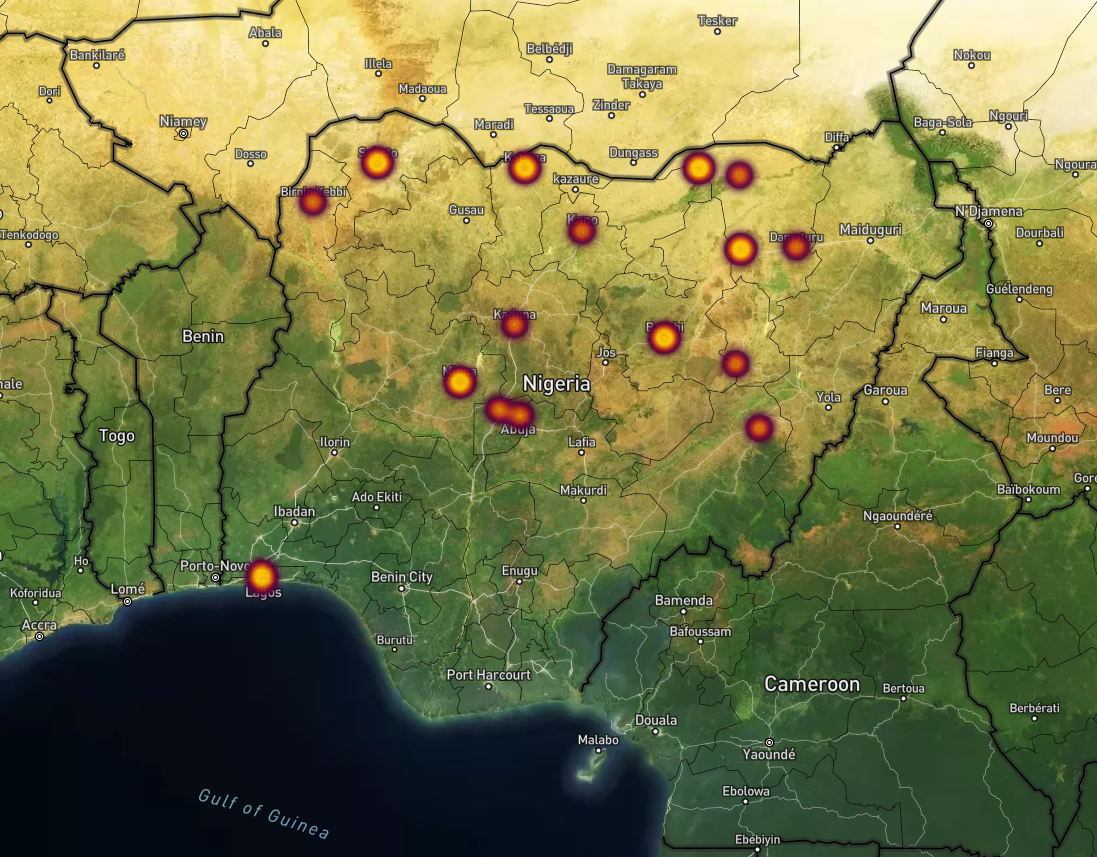
Nigeria carries the highest single-country exposure, underpinned by a documented history of Iranian and Hezbollah-linked operational activity on Nigerian soil. In 2010, Nigerian customs seized 13 containers of weapons in Lagos shipped from an Iranian Revolutionary Guard Corps (IRGC) front company. In February 2013, authorities disrupted an Iranian-funded cell that had conducted surveillance on USAID, the Peace Corps, an Israeli shipping company, a Jewish cultural centre, and hotels frequented by Americans and Israelis in Lagos. Three months later, a weapons cache in a Lebanese-owned property in Kano containing RPGs, anti-tank weapons, and explosives was uncovered, with US Treasury sanctions subsequently linking key suspects to Hezbollah’s Islamic Jihad Organisation.
Current mobilisation among pro-Iranian Shia constituencies in Nigeria following Khamenei’s killing saw 23 protests reported across 10 states between 28 February and 13 March 2026, with 19 incidents occurring before 03 March. All of the incidents were associated with the Islamic Movement in Nigeria (IMN), Africa’s largest Shia movement. Although the IMN does not formally promote violence, its membership base has reportedly been used for operational purposes by Iranian intelligence, and its promotion of anti-Western and anti-Israeli sentiment across northern Nigeria’s Muslim population creates a permissive environment for activation.
On 06 March, the US Embassy in Abuja issued a security alert warning US citizens of a possible terrorist threat against US facilities and affiliated schools in Nigeria. On 08 April, the US Department of State authorised the voluntary departure of non-emergency government employees and family members from the embassy, citing a deteriorating security situation without publicly identifying a specific threat or actor. Neither the alert nor the authorised departure explicitly attributed the threat to Iranian direction, and the causal relationship between the Shia mobilisation and the US security posture changes cannot be confirmed.
Beyond Nigeria, the strongest publicly documented African cases of prior pro-Iran activity are found in Kenya, Ethiopia, and South Africa, though they present in different forms.
Kenya provides one of the clearest examples of disrupted operational plotting, with the 2012 arrest of two Iranian nationals in Nairobi and Mombasa, followed by the recovery of RDX explosives allegedly intended for attacks on Western and allied interests. Ethiopia provides a further case of suspected Iranian-directed plotting: in 2021, Ethiopian authorities announced the disruption of a network allegedly preparing attacks against the UAE embassy and other UAE-, Israeli-, and US-linked targets in Addis Ababa. South Africa, by contrast, is better understood as a permissive support and facilitation environment, having repeatedly featured in US sanctions designations tied to Hezbollah-linked finance, procurement, and sanctions-evasion networks, rather than as a location for a clearly documented foiled kinetic plot.
For Western and Israeli-linked companies, the most plausible risk involves hostile reconnaissance, threat spillover during anti-Israel demonstrations, and pressure on softer commercial nodes, rather than direct assault on hardened facilities. The risk is expected to remain elevated; any material reduction cannot be anticipated, even in the event of a prolonged ceasefire.
Operational Support for Al-Shabaab and Other Militant Groups
A documented operational relationship between the Houthis and Al-Shabaab, encompassing weapons transfers, IED and drone training, and maritime tracking support since 2024, creates a secondary risk corridor in East Africa.
Despite ideological differences between the Houthis and Al Shabaab, evidence has emerged that the two groups share converging operational interests. As a result of this relationship, the Houthis reportedly gain smuggling routes, financial opportunities, and extended reach into the Arabian Sea and western Indian Ocean, while Al-Shabaab gains access to advanced weapons and training it cannot otherwise acquire. Indeed, the relationship has deepened from basic logistical coordination into what the Mogadishu-based Saldhig Institute described in a February 2026 report as political, media, and direct military collaboration between the two groups. Physical meetings confirmed by the UN Panel of Experts reportedly resulted in weapons transfers and drone and IED training, with materiel subsequently used in attacks against African Union forces.
Whether Iran is directing this dynamic or simply benefiting from it remains analytically uncertain. The deepening Houthi-Al-Shabaab relationship may operate outside Iran’s direct command structure, yet in a conflict where Iran is under acute pressure and actively seeking to expand costs for Western and Israeli interests across multiple theatres, the strategic utility of a capable Al-Shabaab cannot be overruled. Iran’s posture throughout this conflict has demonstrated a willingness to leverage any available proxy regardless of ideological alignment where doing so advances its objectives, making the transactional nature of the Houthi-Al-Shabaab relationship a feature rather than a constraint.
Outside of Somalia, Kenya has the highest exposure to this dynamic. Al-Shabaab has demonstrated both the intent and capability to strike Western and internationally linked targets on Kenyan soil. In January 2020, al-Shabaab attacked a US-Kenya military base at Manda Bay, Lamu County, killing two US Department of Defence contractors and one US soldier, among others. Most recently, in 2026, the Counter Terrorism Policing Unit (CTPU) reported the disruption of a planned attack on an undisclosed target in Nairobi linked to suspected al-Shabaab operatives. Weapons seized included automatic rifles, pistols, hand grenades and approximately 600 rounds of ammunition.
The combination of Al-Shabaab’s existing Kenya operational footprint, its newly acquired drone and weapons capabilities, and the broader Iranian interest in expanding pressure on Western targets creates a compounding risk for Western diplomatic, commercial, and civilian infrastructure that cannot be dismissed in the short to medium term.
About Castor Vali Risk Intelligence Services
This deep dive forms part of Castor Vali’s wider Africa intelligence and risk monitoring capability. While this report provides detailed analysis of the escalation in the Middle East and the ripple effects across Africa, our ongoing monitoring ensures that clients receive timely, operationally relevant updates as security dynamics continue to develop.
Our Africa risk monitoring service is designed to help organisations operating across the continent remain informed of emerging threats, including terrorism, political instability, civil unrest, organised crime, and wider geopolitical developments that may affect personnel, infrastructure and commercial operations. Through continuous analysis of local reporting, incident data and regional dynamics, we provide strategic insight that supports informed decision-making and effective risk mitigation.
Africa intelligence subscriptions provide access to:
- Daily Briefs – weekday summaries of key political, security and socio-economic developments across African markets.
- Real-Time Alerts – notifications of major incidents delivered via email and mobile, including analysis, advice and mapping where relevant.
- Weekly Reports – structured reviews of significant events supported by visual data, graphics and incident mapping.
- Monthly Reports – high-level country assessments with short to medium-term risk ratings and forward-looking analysis.
- Deep Dives – detailed examinations of emerging trends, security threats and political developments affecting specific regions or sectors.
We welcome enquiries from organisations seeking to strengthen their situational awareness across Africa. Complimentary trials are available for companies wishing to evaluate the service.
To explore our Africa intelligence reporting or request trial access, please complete the sign-up form below.
Risk Intelligence Service Trial
Clients interested in trailing our subscription packages should complete this form: