


Kenya’s political and civic environment is becoming increasingly volatile and unpredictable as the country edges toward the 2027 General Election cycle. While state institutions remain functional and the overall security environment remains stable, underlying pressure driven by political polarisation, persistent economic grievances, labour disputes, and rising public dissatisfaction is steadily translating into more frequent and more disruptive instances of civil unrest.
The growing frequency, geographical spread, and increasingly coordinated and confrontational nature of demonstrations are creating elevated risks for business continuity, transport operations, and supply chains. The risk landscape is shifting from episodic disruption to sustained operational exposure, particularly across major urban centres, key transport corridors, and high-traffic commercial zones.
Rising Protest Activity and Escalating Violence
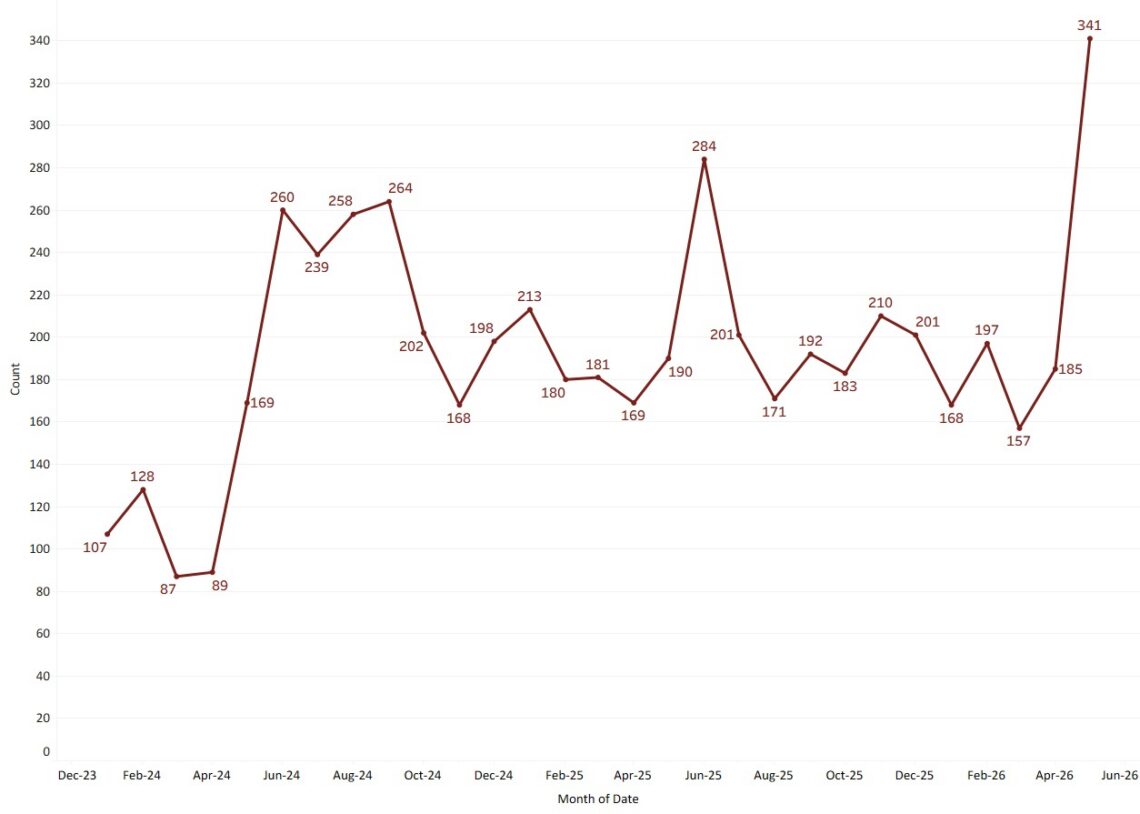
Between January and May 2026, reported civil disorder incidents tracked by Castor Vali increased by 25% compared with the same period in 2025, demonstrating a clear upward trajectory in protest frequency.
May recorded the highest monthly incident count so far this year, largely driven by nationwide demonstrations organised by transport sector stakeholders in response to fuel price adjustments. These disruptions had a widespread impact on mobility, affecting operations across at least 30 counties.
More significantly, over half (53%) of the recorded incidents this year involved violent confrontations, disruption to economic activity, or property damage, demonstrating the increasingly operational nature of the threat.
Across a wider geographic spread
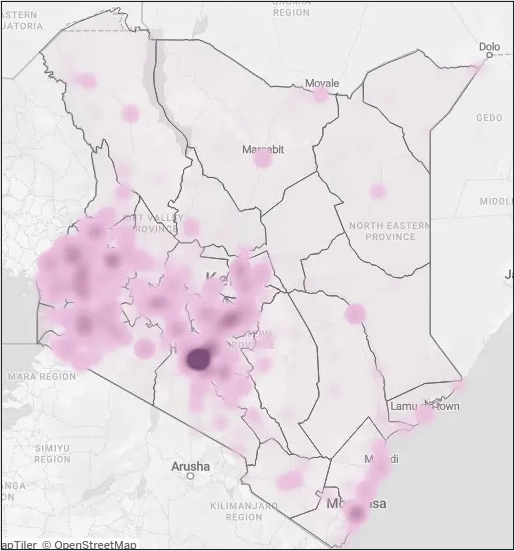
Since the beginning of the year, Castor Vali has recorded acts of unrest in all 47 counties. The geographic spread of incidents across all the counties demonstrates that civil unrest has evolved into a nationwide operational risk rather than a localised security threat.
Despite this broad geographic spread, activity is not evenly distributed. Several counties have emerged as persistent hotspots, with Nairobi, Kiambu, Bungoma, Kirinyaga, Kakamega, and Nakuru collectively accounting for approximately 37% of all recorded incidents. Urban centres and politically sensitive towns remain vulnerable.
Nairobi nevertheless remains the epicentre, responsible for roughly 15% of total incidents. This dominance is largely driven by the capital’s strategic role as Kenya’s administrative, political, and commercial hub. Protest activity in the capital tends to escalate quickly and repeatedly converges around key government precincts, making it a consistent disruption hotspot for both public and private sector operations.
From a political violence perspective, a notable pattern has emerged in counties perceived to be politically aligned with opposition figures. Opposition-aligned counties have recorded a comparatively higher incidence of politically motivated violent unrest. Counties affected include Kirinyaga, Kisumu, Meru, Nyeri, Nyandarua, Laikipia, Kakamega, Makueni, Vihiga and Narok. This trend is closely linked to the intensity of police responses during rallies and public gatherings, where containment measures often escalate tensions and lead to confrontations.
Key drivers of instability
- Political polarisation and electoral positioning: Political competition ahead of the 2027 elections is the major driver of instability. The continued rivalry between President William Ruto and former Deputy President Rigathi Gachagua has intensified divisions across several regions, particularly in Central Kenya, Nairobi, parts of the Rift Valley, and Eastern Kenya. Gachagua was impeached in October 2024 by both the National Assembly and the Senate based on various charges, including insubordination to the president, inciting ethnic violence, corruption, and undermining the government, among other charges. Gachagua has since contested his impeachment in court while also establishing a new political party, the Democracy for the Citizens Party (DCP), which is reportedly gaining support in Central, Eastern, Nairobi, and parts of the central Rift Valley regions. The DCP is among the political outfits perceived to pose a challenge to the President’s party, the United Democratic Party (UDA), in some of the named regions. Additionally, internal fragmentation within opposition formations, including Orange Democratic Movement (ODM)-linked factions, is adding further divisions. Reports of disruptions to opposition-linked rallies and events, heightened political intolerance, and allegations of selective police enforcement have contributed to perceptions of a shrinking civic and political space, further driving unrest ahead of the next electoral cycle.
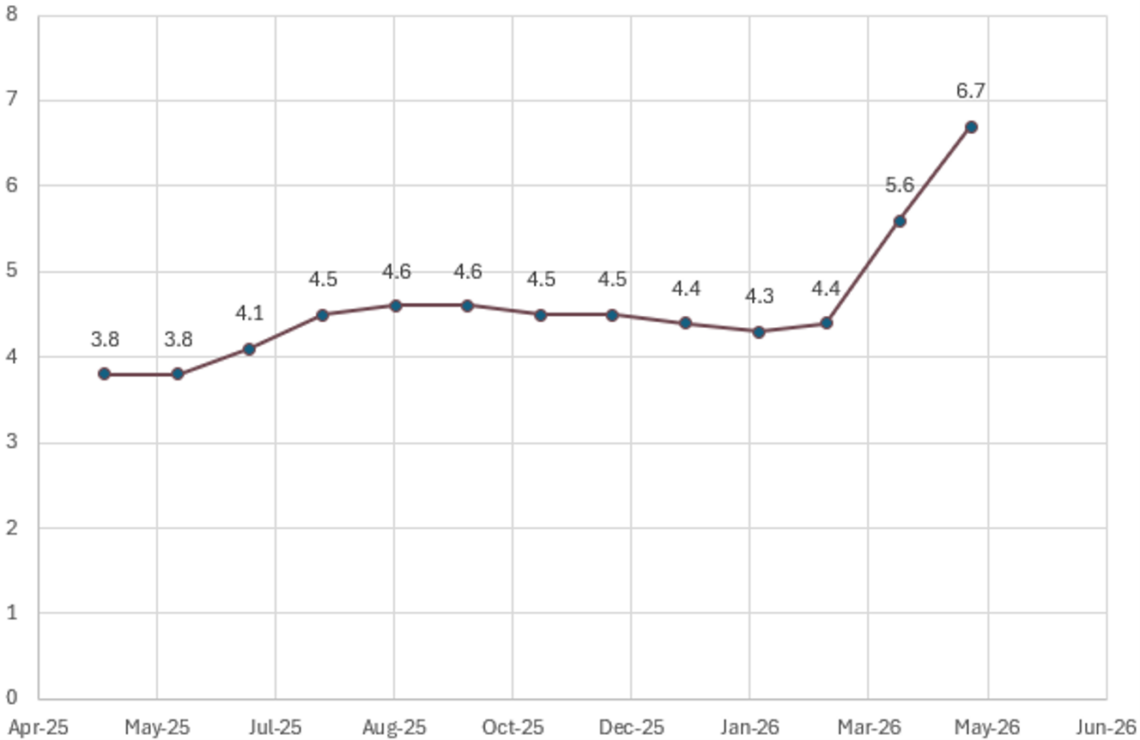
- Economic pressures and cost-of-living concerns: Economic grievances remain among the most consistent drivers of unrest. Inflationary pressures – largely driven by fuel price adjustments – along with labour-related disputes, continue to generate public dissatisfaction and periodic demonstrations. Indeed, the inflation rate in Kenya has consistently moved upwards over the last 12 months, reaching a high of 6.7% in May 2026. Particularly notable is the growing sensitivity around monthly fuel price reviews. The May unrest demonstrated that significant increases in fuel costs, especially diesel prices, can trigger coordinated mobilisation by transport-sector stakeholders and other affected groups. Given the direct impact of fuel prices on logistics costs and household expenditure, future fuel adjustments will remain a key trigger for unrest.
- Shrinking civic space: The political and civic environment is increasingly characterised by friction between public mobilisation efforts and state security responses. Civil society organisations and advocacy groups continue to utilise a range of avenues, including street protests and legal challenges, to oppose unpopular or perceived unconstitutional government policies and directives, as well as to demand accountability for alleged extrajudicial killings. Several incidents recorded this year have resulted in confrontations between demonstrators and security forces, leading to casualties and intensifying public scrutiny of policing practices and the state’s management of dissent. A notable example was the disruption of a post-budget public forum at the All Saints Cathedral on 12 June, organised by the Kenya National Commission on Human Rights. The event was reportedly invaded by a group of nearly 100 suspected criminals who allegedly assaulted and robbed attendees. The incident reflects a broader trend in which criminal actors are reportedly being used to disrupt events perceived as critical of government policy. This trend is contributing to perceptions of a shrinking civic space.
The combination of political tensions, perceived restrictions on opposition activity, and aggressive crowd-control measures increases the potential for demonstrations to escalate rapidly, particularly in urban centres where political mobilisation capacity remains higher.
Business and Transport Sector Impacts
The most significant impact of the current unrest environment is the growing disruption to business operations and transport networks. Recent demonstrations have resulted in the temporary closure of businesses and workforce mobility challenges. Urban centres such as Nairobi, Nakuru, Machakos, Kakamega, Kajiado, Bungoma, Kiambu, and Kirinyaga continue to record elevated levels of unrest activity, increasing operational risks for organisations with assets and personnel in these areas.
In addition to direct disruptions caused by demonstrations, unrest has periodically affected key domestic and regional logistics corridors, resulting in delayed cross-border cargo movement and increased operational costs. Indicative of the impact, transport sector stakeholders estimated losses of approximately KES 1 billion (USD 7.7 million) during the May fuel-related demonstrations alone.
A growing secondary risk trend is the increasing convergence between civil unrest and opportunistic criminal activity. Criminal networks and loosely organised groups are increasingly exploiting moments of public disorder and stretched security deployment to engage in looting, extortion, and targeted attacks on commercial premises. These incidents are not only driving property losses but are also elevating the risk of injuries and fatalities during periods of unrest. This trend was particularly evident during the May fuel-related demonstrations, where businesses and motorists were targeted in several counties, resulting in 25 fatalities.
Pre-Election Outlook: Towards the 2027 General Elections
The risk of civil unrest is high through the remainder of the year and into 2027. Urban centres, informal settlements, and politically contested counties will remain particularly vulnerable to unrest, gang activity, and targeted acts of political intimidation.
The most likely scenario involves continued localised demonstrations driven by political activity, labour disputes, governance concerns, by-elections, and fuel-price-related grievances. However, the potential for coordinated nationwide mobilisation remains high around key events, including politically significant anniversaries, anniversary events linked to the June 2024 anti-government protests, major opposition events, new unpopular government policies, or future fuel price increases.
Of particular concern is the accelerating convergence of economic strain, organised criminal activity, political mobilisation, and the continued erosion of civic space. Early indications suggest these dynamics are likely to persist, having already emerged more than 12 months ahead of the national elections. If they continue on this trajectory, Kenya is likely to face increasingly frequent and more disruptive nationwide demonstrations, with a growing risk of sustained impacts on transport networks, commercial operations, and critical infrastructure.
| Date | Event | Risk Rating |
| Thursday 25 June | The 2nd anniversary of the 25 June 2024 countrywide unrests | Elevated risk of civil unrest countrywide |
| Tuesday 07 July | The Saba Saba (“7/7”) commemoration | Elevated risk of civil unrest countrywide |
| Thursday 16 July | Ol Kalou constituency (Nyandarua County) | Elevated risk of election-related unrest in Ol Kalou |
Stay Ahead of Risk with Castor Vali’s Intelligence Services
Subscribe to Castor Vali’s Risk Intelligence Service for full access to detailed monthly reports, weekly updates, real-time alerts, and strategic outlooks. These resources are designed to enhance the safety of your personnel, support business continuity, and aid in real-time decision-making during periods of uncertainty.
Risk Intelligence Service Trial
Clients interested in trailing our subscription packages should complete this form: